

In our modern world, we are saturated with sound. Yet, we rarely consider its quality. We only notice it when it becomes a problem, a distraction echo in a meeting room, the disruptive noise of traffic, or the muddled dialogue in a theatre. Soundproofing keeps unwanted noise from entering or exiting a space, while acoustics deals with controlling the way sound behaves inside a room. By using a combination of both methods, you can achieve optimum results.
The quality of our sonic environment is a critical, unseen layer of architecture that dictates our comfort, focus, and enjoyment.
This is the domain of the acoustic industry, a field dedicated to managing two distinct yet related challenges: soundproofing and acoustics. As highlighted by solutions from specialists like us at Fibretex India Pvt. Ltd. under our brand Fibrecrete, these are not interchangeable terms.
Soundproofing is about isolation—keeping unwanted noise out or in. Acoustics is about control—shaping the behavior of sound within a space. Achieving a truly effective environment, whether it's a recording studio, a cinema, or an auditorium, requires a masterful blend of both.
Soundproofing, or sound insulation, is the first line of defence. Its goal simply is to create a barrier that prevents sound from traveling between spaces. This is about creating a quiet envelope, ensuring that the outside world stays out and the sound generated inside does not disturb others.
Core Principles & Methods
Effective soundproofing relies on a few key physical principles:
Mass:
The simplest way to block sound is with a heavy, dense barrier. This is why concrete walls are more effective than thin partitions.
Decoupling:
This involves mechanically separating structures (like creating a room-within-a-room) so that sound vibrations cannot travel through them.
Sealing:
Sound, like water, will find the smallest gap. Effective soundproofing requires meticulous sealing of all air leaks, cracks, and joints. Practical solutions involve installing barriers, solid-core doors, and specialized soundproof doors & windows for a truly isolated space.
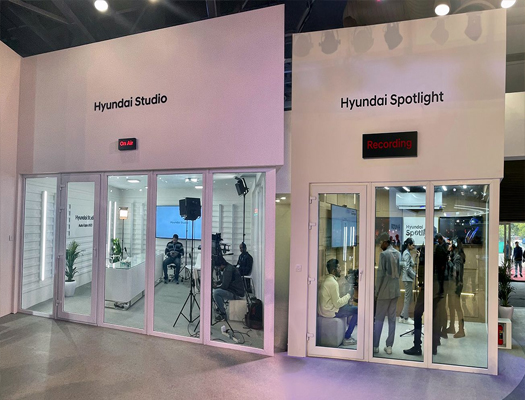
This is arguably the most critical application. A studio's primary need is a quiet background to capture a pure, uncoloured recording. Soundproofing is essential to block all external noise, from a passing truck to a conversation in the next room.
To create an immersive cinema experience, you must first isolate the room. This prevents the powerful sound of a movie's explosions from disturbing the rest of the household, and vice-versa.

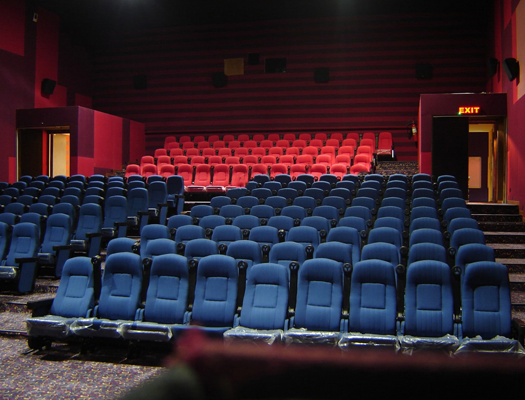
In a multiplex, soundproofing is crucial to prevent sound bleed between adjacent auditoriums, ensuring that the audience in one theatre only hears their movie.
Once a space is quiet, the second challenge begins. Acoustics is the science of controlling how sound behaves inside the room.
An empty, soundproofed room (like a concrete bunker) would be a terrible place to listen to music or have a conversation. The sound would be harsh, chaotic, and full of jarring echoes. The goal of good acoustics is to achieve a balanced and purposeful sound environment.
An appropriate reverberation time (RT60):
This is how long it takes for a sound to fade away. A cathedral has a long reverberation time (echoey), while a recording studio's vocal booth is dead (very short).
Achieving these goals requires a strategic combination of two main tools: absorption and diffusion.
Absorption
This is the process of trapping sound energy to stop it from reflecting. This reduces echo. Porous materials are used to trap the sound, converting the sound energy into a tiny amount of heat.
Fibrecrete Solutions
This is where specialized products come in.
Diffusion
Sometimes, you don't want to kill all the sound energy, you just want to scatter it. Diffusers are specially shaped panels that break up a sound wave and reflect it in many different directions. This livens up a room and makes it sound larger and more natural without creating harsh echoes.
The true art of acoustics lies in applying these principles of isolation and treatment to the specific needs of a space.
The ultimate aim is to create a connection between the performer and the audience. Speech must be perfectly intelligible, and music must be rich and clear for everyone, from the front row to the back.
This is the most complex application, requiring a carefully designed combination of Isolation, Absorption, Reflection and Diffusion.
Absorption is applied to back walls and side walls to prevent echo. Reflective (and often diffusive) surfaces are used near the stage and on the ceiling to push the performer's sound out to the audience. Balcony faces must be treated to prevent them from becoming a source of problematic reflections.
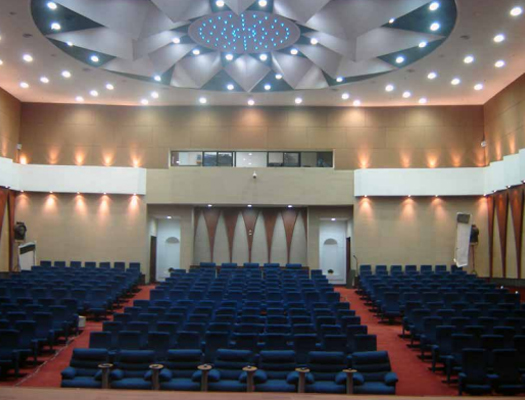

To accurately record, edit, mix, or monitor sound. The room itself must not lie.
An untreated room's reflective surfaces are out of control and will negatively color any sound recorded or played back.
Studios (especially control rooms) often use heavy acoustic treatment to control the room's liveliness. This creates a neutral, precise environment where producers and engineers can trust that what they are hearing is the recording itself, not the sound of the room.
A truly immersive theatre experience. The three pillars of film sound—dialogue, sound effects, and music—must be delivered with perfect clarity and impact.
A careful design of sound reflections, reverberation, absorption, and diffusion.
Absorption is used to ensure dialogue is crisp and clear, preventing it from being muddied by echoes. The strategic placement of surround sound speakers is balanced with acoustic treatment to ensure the sound feels like it's coming from all directions, creating a seamless and rich soundscape.

Effective soundproofing and good acoustics are about designing human experiences. It is a field that moves beyond silence to create environments that are purpose-built for their function. The difference between a distracting space and a comfortable one, or between a muddled performance and an impactful one, often comes down to this unseen architecture.
It is only through a holistic approach—understanding the need for both isolation and control and using the right specialized materials, we can shape sound itself.
Better Acoustic gives more pleasure, comfort & enhances the experience.